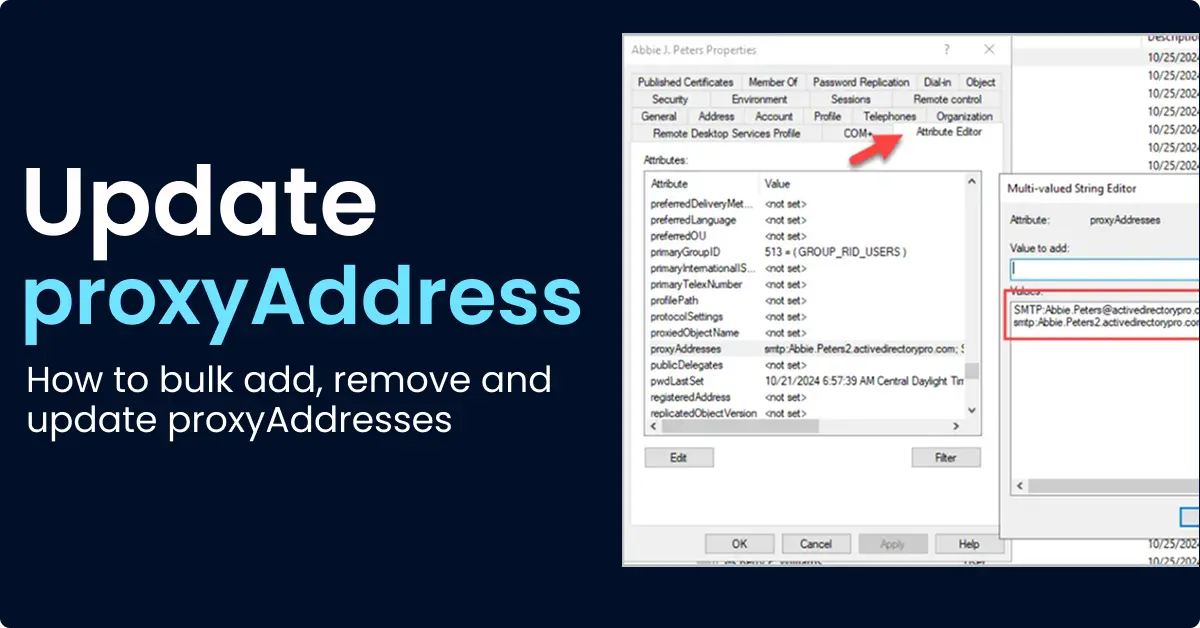
Need to add a proxy address to a user account in Active Directory?
In this guide, I’ll show you how to add proxy addresses using Active Directory Users and Computers, PowerShell, and the AD Pro Toolkit.
I’ll also cover how to bulk add and remove proxy addresses using a CSV file.
Add Proxy Address using Active Directory Users and Computers
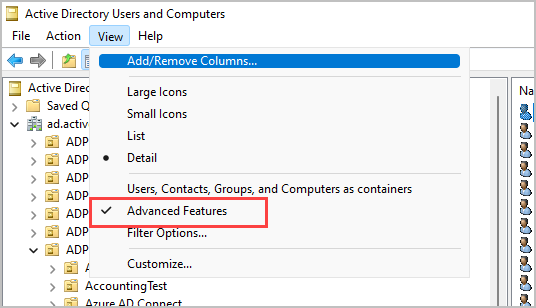
Step 1. Make sure Advanced Features are enabled by clicking View > Advanced Features
Step 2. Browse to a user and open the account properties
Step 3. Select the “Attribute Editor” tab.
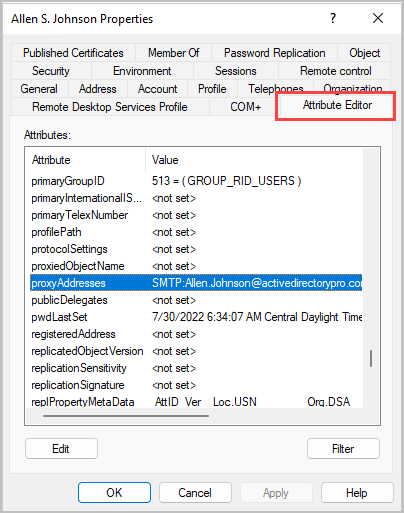
Step 4. Select the proxyAddresses attribute and click edit.
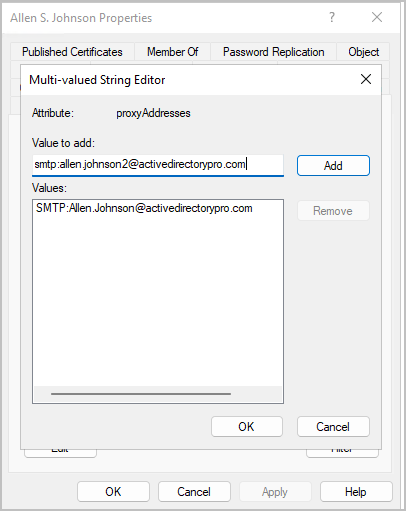
Step 5. In the value to add enter the proxy address and click the add button.
Note: Use capital SMTP to set a primary address. Only one primary can be set the others must be lowercase smtp.
Add Proxy Address with PowerShell
To add ProxyAddresses with PowerShell you would use the set-aduser cmdlet.
Set-ADUser Abbie.Peters -add @{ProxyAddresses="smtp:Abbie.Peters2.activedirectorypro.com"}
In the above example, I’m adding a new proxyaddress to user Abbie.Peters.
You can view the users proxyAddresses in Active Directory by clicking on the attribute editor and then the proxyAddresses attribute.
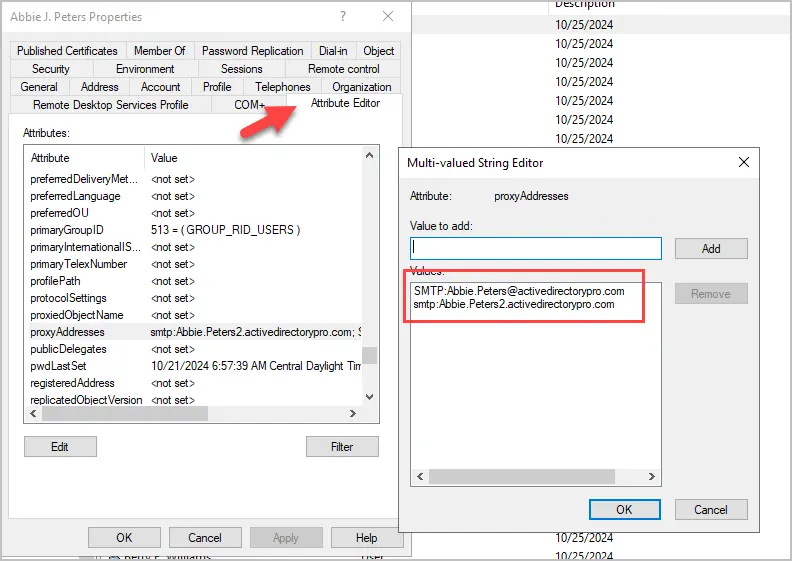
To remove proxyaddresses with PowerShell use the -remove parameter.
Set-ADUser Abbie.Peters -remove @{ProxyAddresses="smtp:Abbie.Peters2.activedirectorypro.com"}
Bulk Add Proxy Addresses with AD Pro Toolkit
If you need to add or modify proxy addresses for multiple users then the AD Pro Toolkit the easiest option.
Download AD Pro Toolkit and give it a try.
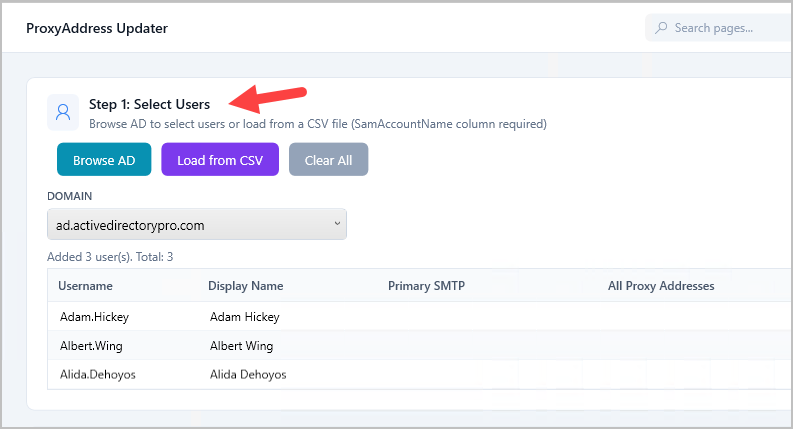
Step 1. Select Users
You can either click “Browse AD” and select accounts or use a list from a CSV file.
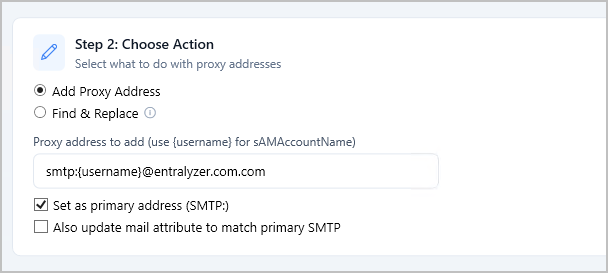
Step 2. Choose Action
Choose to “Add Proxy Address” or “Find & Replace”.
In this example, I’m going to add a proxy address to multiple users.
Step 3. Click Preview
You can click “Preview Changes” to see what the changes will be.
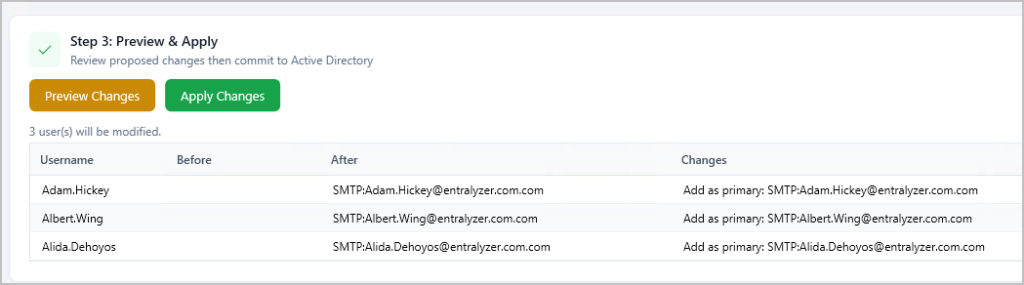
If the preview looks good, click “Apply Changes”.
Find and Replace ProxyAddresses
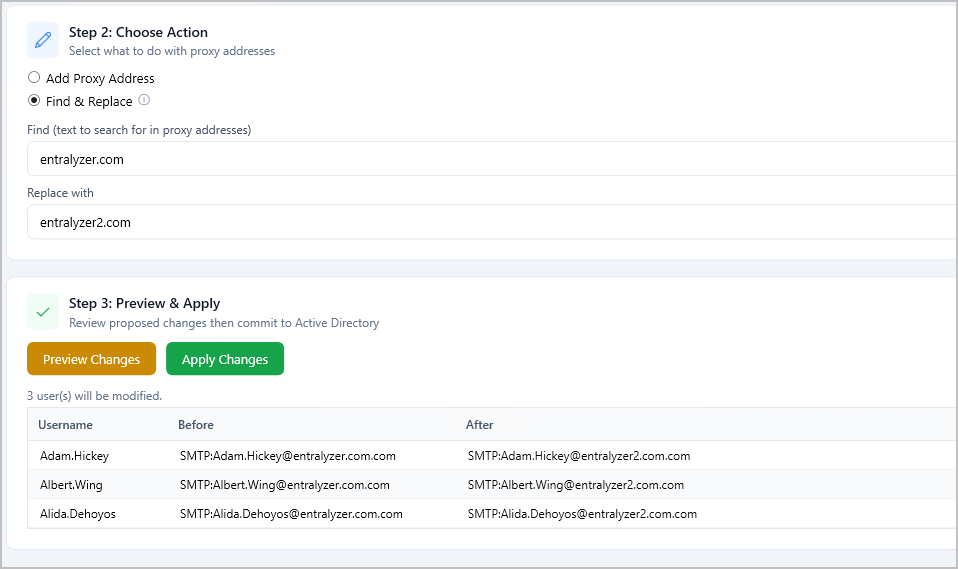
The AD Pro Toolkit also has a find and replace feature.
Enter the text you want to find and text to replace it with. For example, I want to replace the domain entralyzer.com with entralyer2.com
Export User Proxy Addresses with PowerShell
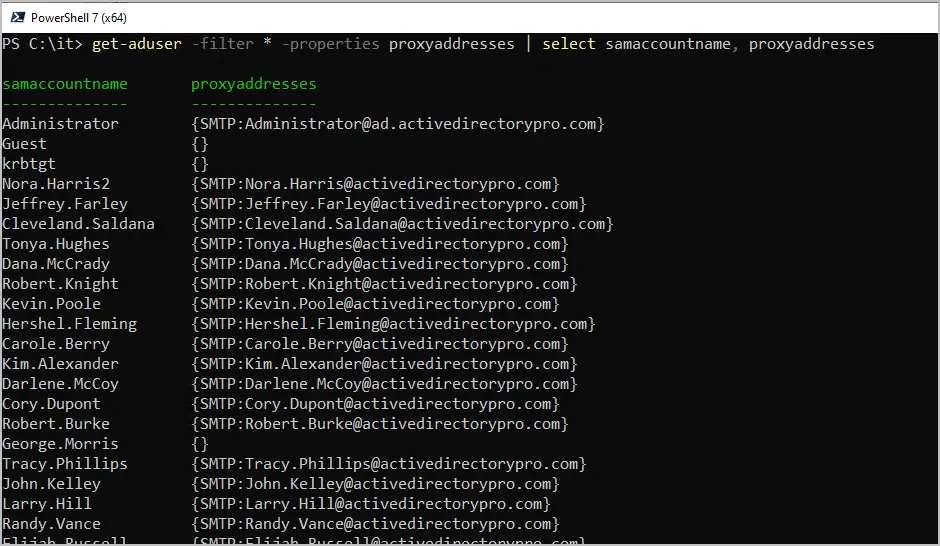
To get a list of all users proxyAddresses use the below PowerShell command.
get-aduser -filter * -properties proxyaddresses | select samaccountname, proxyaddresses
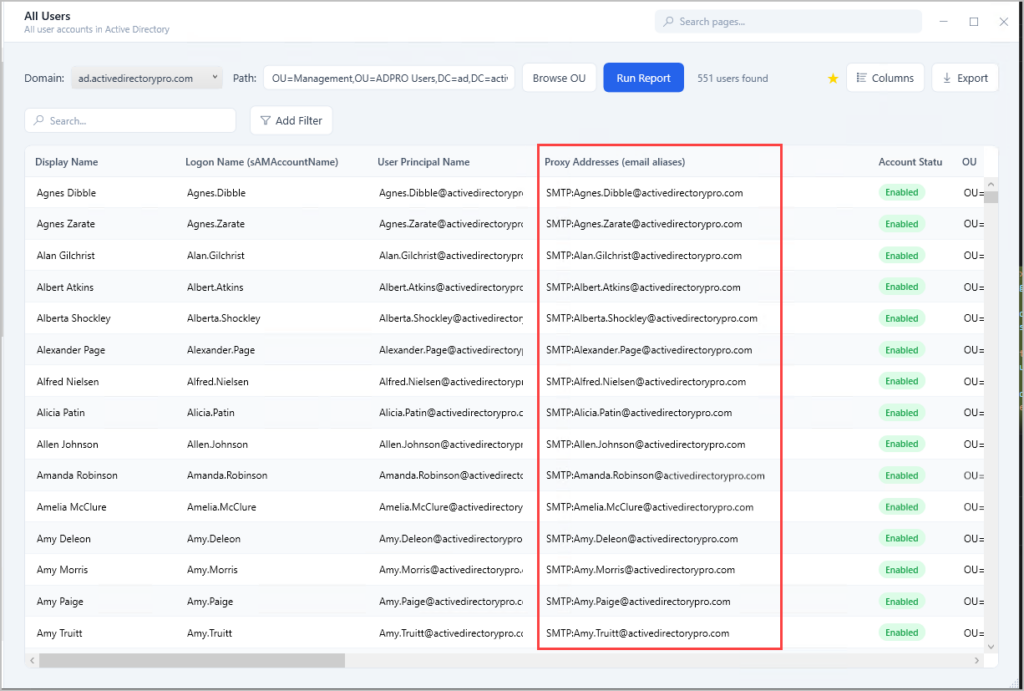
With the AD Pro Toolkit click add the Proxy Addresses column to any report.
Click the export button to export the report.
If you are using Azure AD connect or Office 365 then knowing how to bulk update users ProxyAddresses attribute is a must. In this guide, I showed you multiple examples for updating single accounts, adding multiple addresses, and bulk updating a list of accounts from a CSV file
PowerShell is a great tool for making mass changes to Active Directory users but for those that want a GUI option, the AD Bulk User Update tool is a simple and easy solution.
Let me know in the comments below if you have any questions.